Start by separating the equipment terms.
“Wiped-film,” “molecular distillation,” and “short path” are often used together in procurement searches, but they are not interchangeable labels for one machine. Wiped-film molecular distillation can use a short-path architecture. A common batch short-path flask arrangement is a different equipment format with its own handling and scale considerations.
That distinction matters because the buying decision should begin with the refining job, feed condition, desired output, and installed workflow—not an assumption that every search term describes the same process cell. An incumbent category can be appropriate when its form factor and separation objectives fit the application.
The MPS alternative
Consolidate downstream work around the output you need.
The MPS does not position THCa isolate and distillate as the same product. It supports distinct outputs in a common platform: THCa isolation, HTE separation, and concentrated cannabinoid distillate refining. Testing demonstrated that the MPS refines crude or decarboxylated cannabis extract into high-purity concentrated cannabinoid distillate without a separate wiped-film or short-path system.
That capability changes the equipment conversation from “Which distillation box do we buy?” to “How should the complete post-processing cell handle this qualified feed and intended product?” The MPS combines isolation, filtration, collection, and refining stages in connected equipment rather than requiring a separate downstream distillation station for the tested application.
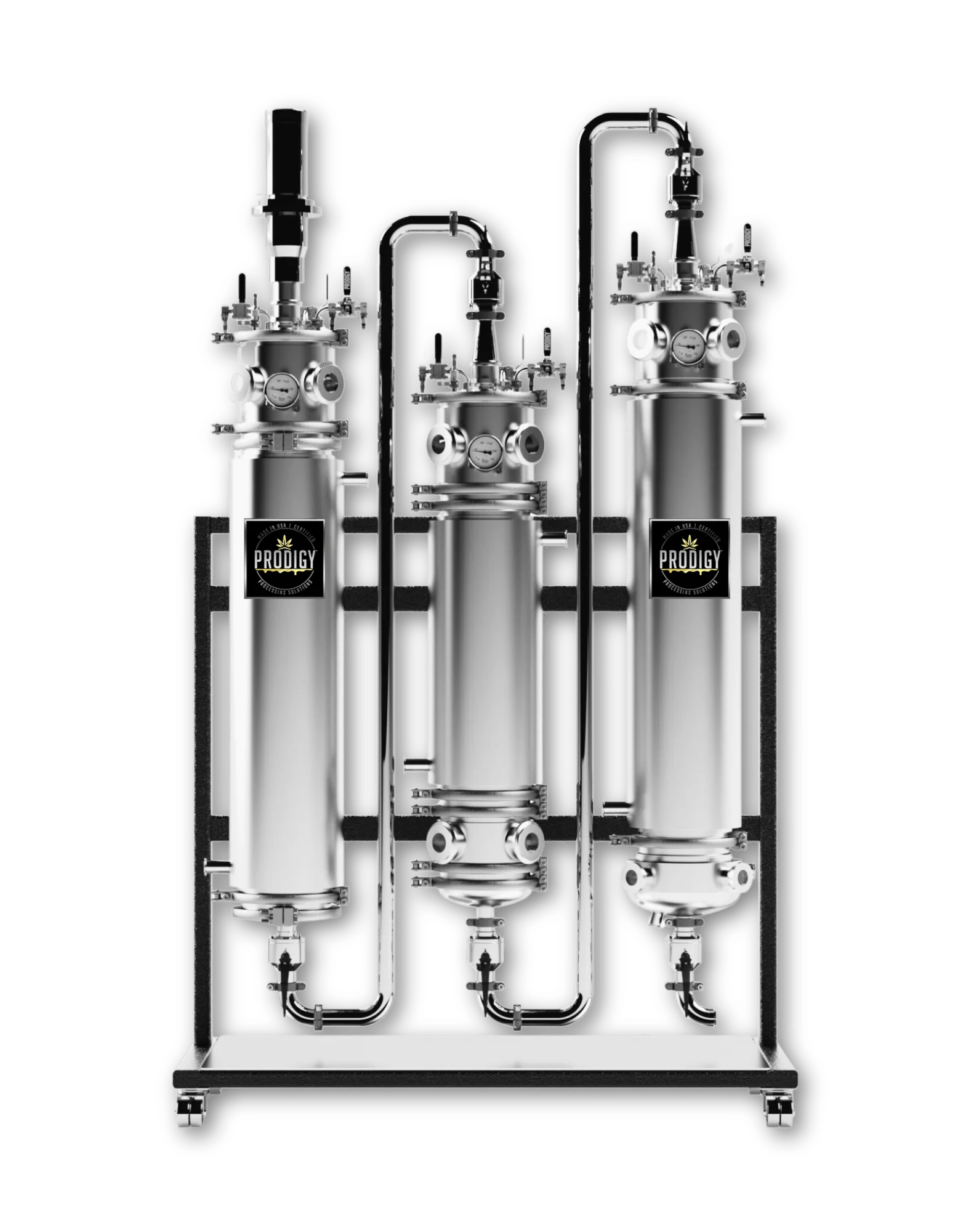
What is integrated in the MPS 30 configuration
Three-vessel platform
Three 30 L jacketed 316L stainless-steel vessels configured for post-processing work.
Isolation
Pneumatic or C1D1 agitation configuration with a 25-micron basket.
Filtration
A sintered-disc filtration stage for integrated material handling.
HTE collection
A dedicated collection stage for High Terpene Extract.
Build envelope
250 PSIG and full-vacuum capability, set for the configured build.
Documentation
ASME BPE fabrication and available build-specific records.
Comparison guide
Compare the whole refining cell, not an equipment label.
The following prompts keep the comparison practical. They do not assign a universal winner; the right approach depends on the feed, fraction objectives, desired output, production plan, and facility. They do reveal where an integrated platform can reduce equipment sprawl for the MPS-qualified application.
- Job and output
Incumbent category to evaluate
Wiped-film molecular distillation and short-path systems are commonly evaluated for refining and fractionation work. A batch short-path flask setup is a different equipment form from a wiped-film molecular unit, even though wiped-film molecular distillation can use a short-path architecture.
MPS application fit
For tested crude or decarboxylated cannabis extract, the MPS refines to concentrated cannabinoid distillate while also supporting THCa isolation and HTE separation in the same post-processing platform.
- Equipment-chain handling
Incumbent category to evaluate
A refining line may include distinct staging, finishing, collection, and transfer points around the primary distillation equipment. The right design depends on the product and operating plan.
MPS application fit
The MPS combines isolation, sintered-disc filtration, HTE collection, and distillate refining in connected vessels, reducing standalone equipment handoffs for the qualified application.
- Maintenance and cleanability
Incumbent category to evaluate
A complete comparison should account for the assemblies, seals, surfaces, cleaning tasks, and access needed across the entire installed refining cell—not merely the central unit.
MPS application fit
The MPS gives teams one integrated platform to inspect, clean, train around, and maintain. Its 316L stainless-steel process vessels and available build documentation support a practical lifecycle review.
- Footprint and utilities
Incumbent category to evaluate
Installed footprint can grow with separate material staging, transfer hardware, collection vessels, vacuum support, and thermal management. Site layout and service access matter as much as nominal equipment size.
MPS application fit
A consolidated MPS cell can simplify floor planning. The final review still needs to address jacket-temperature support, vacuum, electrical classification, utility routing, and safe operator access.
- Cost per saleable gram
Incumbent category to evaluate
Avoid a purchase-price-only comparison. Include labor, changeovers, cleaning, maintenance, material movement, utilities, downtime, and the product quality required to make a saleable output.
MPS application fit
The MPS provides a more consolidated downstream path to evaluate against those costs. A useful quote uses your feed, target output, production target, facility, and current bottleneck rather than a generic financial-return claim.
Use a qualification conversation before a claim of equivalence.
The MPS capability is firm for the tested crude and decarboxylated cannabis applications described here. It is not a promise that every feed, fraction target, or legacy process should be transferred without review. Confirm feed quality, target specification, facility controls, and process acceptance criteria as part of your own qualification program.
What makes a quote useful
- 1Current refining system, material transfers, and maintenance burden
- 2Feed condition and desired THCa, HTE, or distillate output
- 3Production target and desired product-quality criteria
- 4Existing bottleneck and facility constraints, including utilities and thermal support
Build the full downstream plan.
Refining equipment performs best when it is planned with upstream extraction, jacket-temperature support, cleanability, documentation, and operator workflow in view. The MPS is designed to slot into that broader equipment conversation rather than stand apart from it.
A practical next step
Compare your refining path with an integrated MPS application review.
Bring your current system, feed, desired output, bottleneck, and production target. We will use those facts to determine whether the MPS fits the downstream job.
Discuss Your MPS Application