THCa isolation
Isolate THCa as a distinct, high-value output within an integrated post-processing workflow.
MPS Multi-Processing System
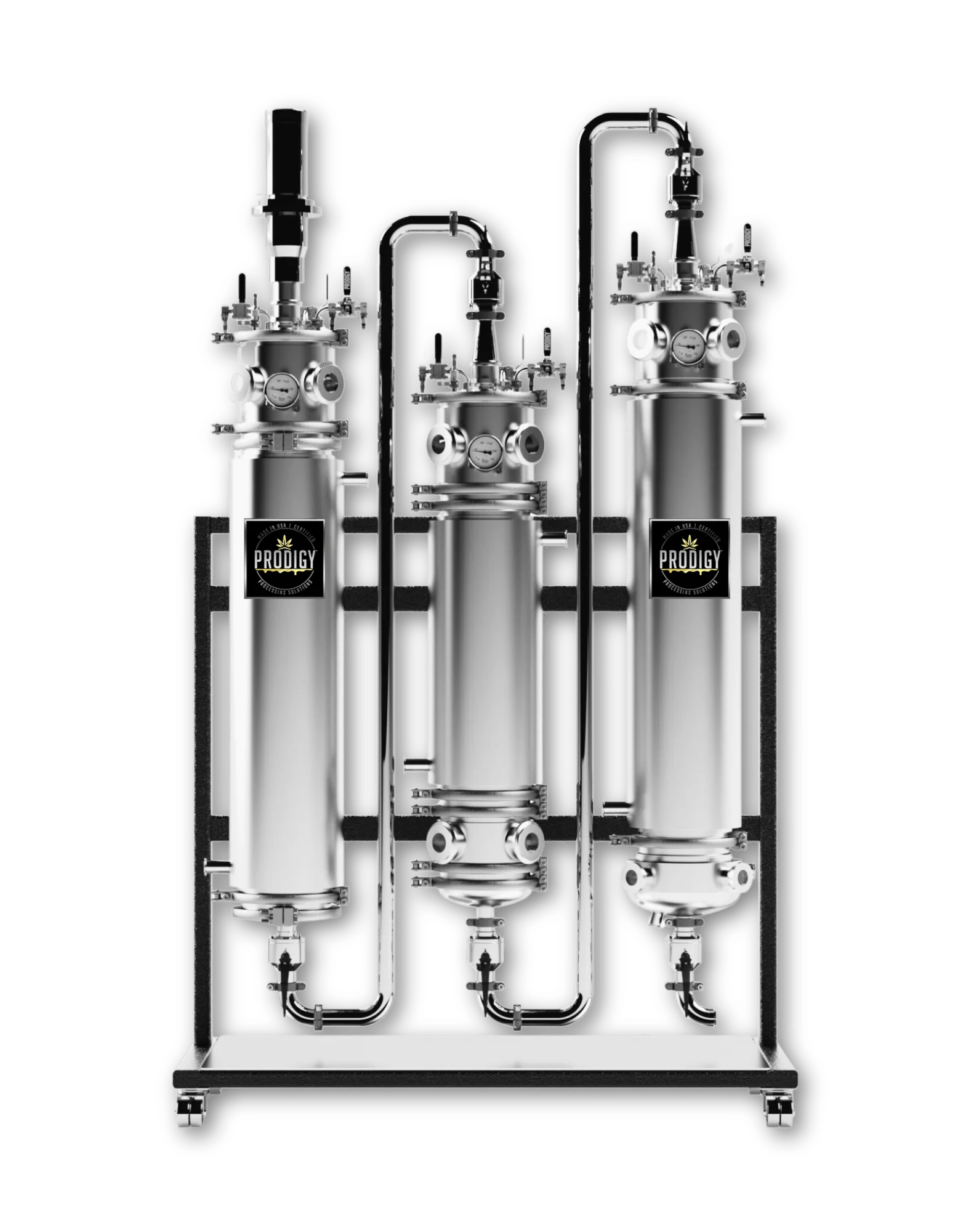
The MPS brings THCa isolation, High Terpene Extract separation, and cannabinoid distillate refining into one connected post-processing platform. Testing demonstrated refinement of crude or decarboxylated cannabis extract into high-purity concentrated cannabinoid distillate without a separate wiped-film or short-path system.
Configured outputs
Distillate and THCa isolate are distinct products with different commercial and process goals. The MPS is designed to support a consolidated workflow so teams can evaluate the output they need without assembling a separate post-processing line for every handoff.
Isolate THCa as a distinct, high-value output within an integrated post-processing workflow.
Separate and collect HTE—High Terpene Extract—without treating it as a generic evaporation byproduct.
Refine qualifying crude or decarboxylated cannabis extract into concentrated cannabinoid distillate.
Consolidated workflow
The MPS is the post-processing complement to a cannabis extraction operation. Its connected vessels give operators a practical place to isolate, filter, separate HTE, and refine approved feed material into distillate. This consolidation is about process ownership: fewer equipment interfaces to stage, clean, coordinate, and document.
Temperature, pressure, vacuum, and agitation are managed as process controls within the configured system. Application review aligns the feed condition, desired product, thermal support, and facility requirements before a build is specified.
Review crude or decarboxylated cannabis extract and define the desired downstream product.
Use the isolation and sintered-disc filtration stages as part of a connected material path.
Capture HTE as High Terpene Extract—an output that remains distinct from cannabinoid distillate.
Produce concentrated cannabinoid distillate in the MPS rather than routing material through a separate wiped-film or short-path unit.
MPS 30 configuration
The MPS 30 build starts with three jacketed 316L stainless-steel vessels and purpose-specific isolation, filtration, and collection stages. Final configuration, applicable documentation, and electrical requirements are confirmed for the build.
View MPS in the product catalogBuying perspective
A meaningful comparison considers the installed refining cell and the work required to make saleable material. The MPS is designed to reduce equipment sprawl while retaining practical control of the stages that matter downstream.
Compare the equipment chain required to reach the desired output, not a single machine in isolation. An integrated platform can reduce the number of handoffs between purpose-built vessels.
Each transfer can add scheduling, cleanout, staging, and material-accountability work. The MPS keeps isolation, filtration, HTE separation, and distillate refining in one connected workflow.
Ask which surfaces, seals, assemblies, and cleaning tasks are involved across the complete process. Fewer standalone systems can simplify maintenance planning and operator training.
Evaluate installed footprint, jacket-temperature support, vacuum, electrical classification, and service access as a complete cell—not just the primary refining device.
For a category-by-category guide, read Wiped-Film & Short-Path Alternatives for Cannabis Refining.
A focused conversation lets the team define the downstream system around your actual operation rather than an abstract equipment category. Share these five inputs to begin:
Start with the application
Request a data sheet or quote after reviewing your feed, target output, current equipment, and downstream constraints.
Request Data Sheet or Quote